


Our Kachi Ghani Process
Five steps, from seed to bottle. Nothing skipped, nothing added.
कच्ची घानी — the traditional wooden press
"Kachi Ghani" refers to a specific extraction method — oil pressed on a wooden or stone ghani that turns slowly, at low speed, without the heat a high-speed industrial expeller generates. It's older, slower, and produces less oil per hour than modern refining. That's the trade-off, and it's the one we make on every batch.
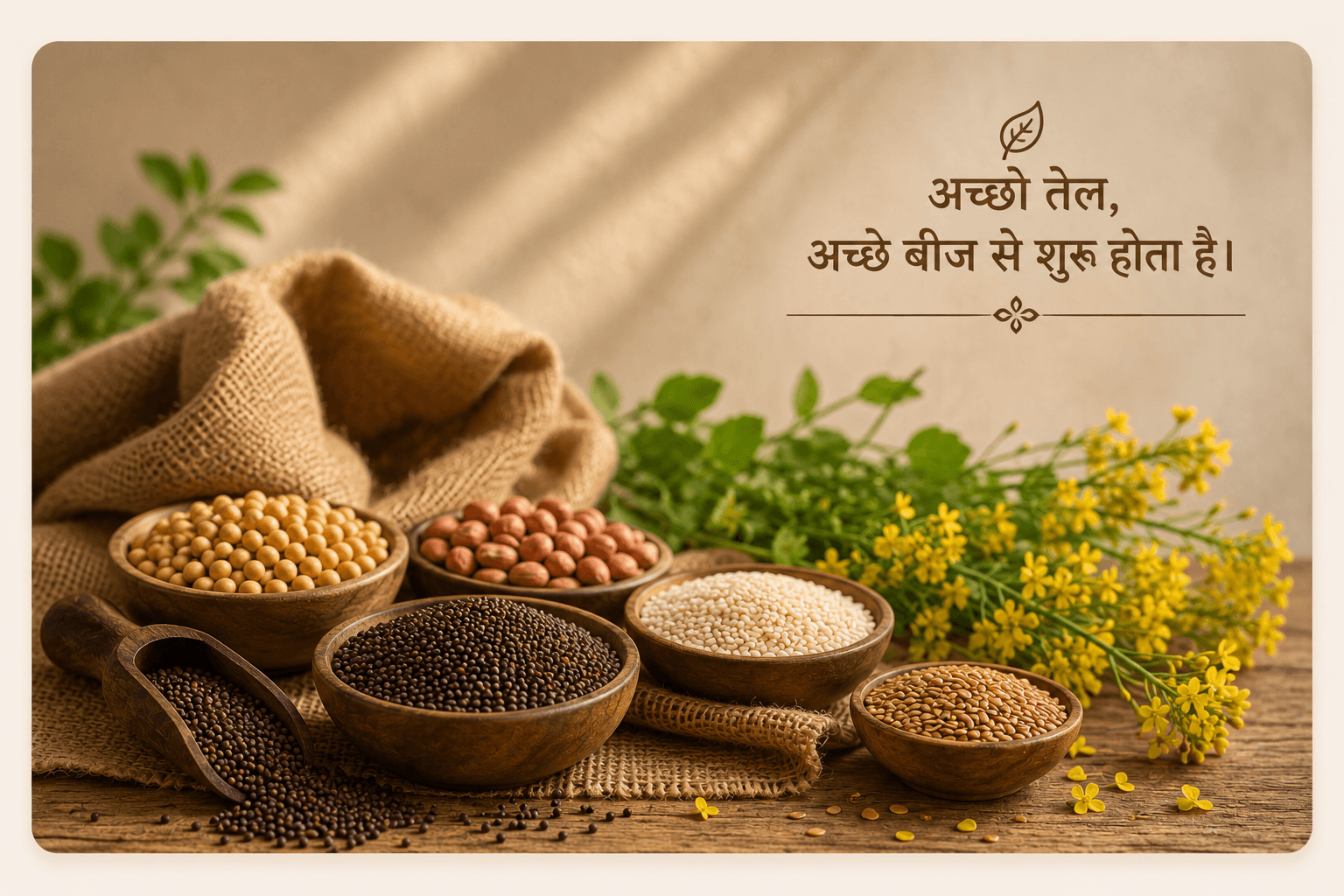
Step 1
Select the Seeds
Every batch starts with handpicked seeds — mustard, groundnut, sesame, coconut, and the rest of our line — checked for quality before they ever reach the press. Poor seed makes poor oil; there's no fixing that downstream.
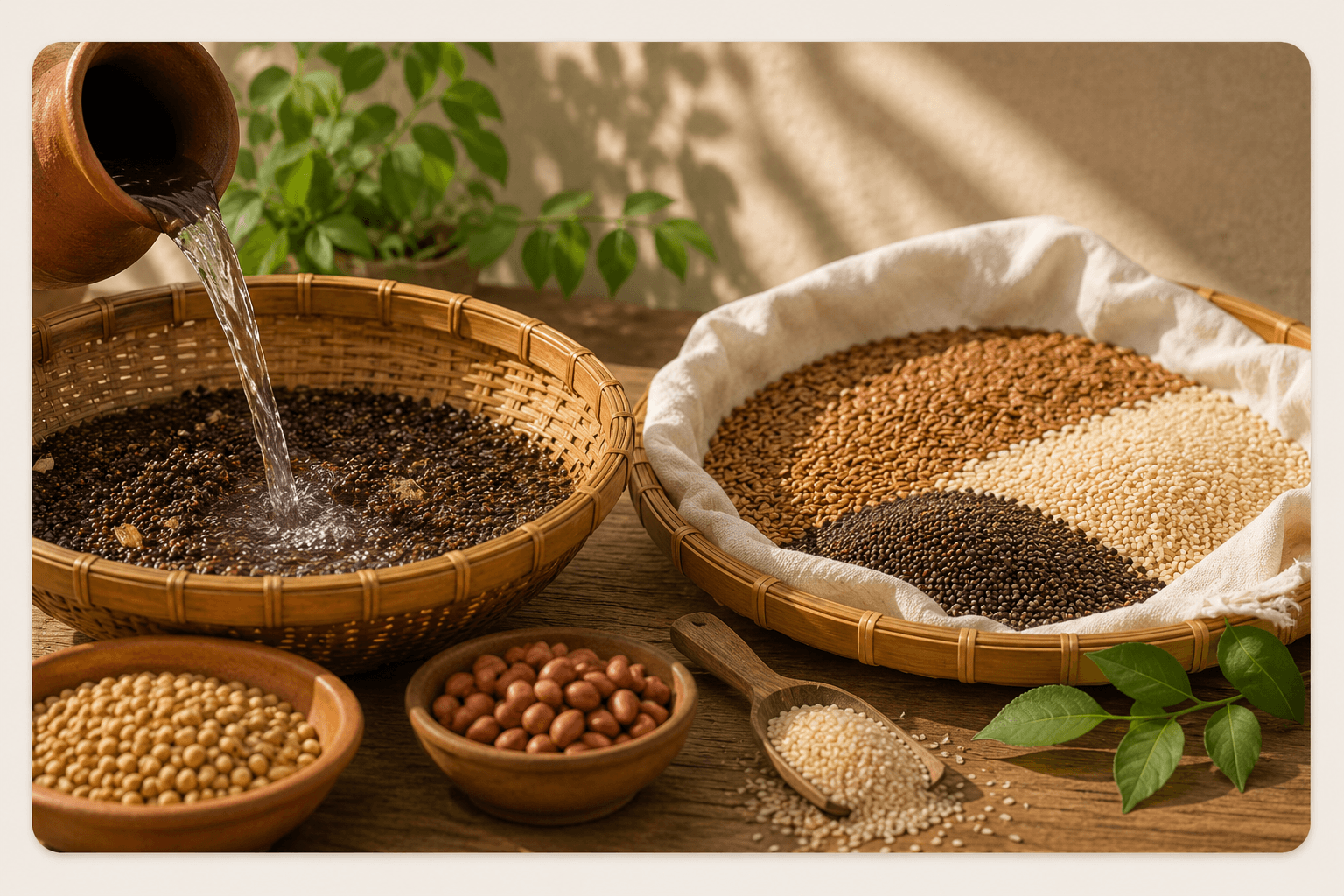
Step 2
Clean and Dry
Seeds are cleaned of husk and debris, then dried the traditional way before pressing. This step alone takes time we don't rush — moisture left in the seed changes how it presses and how the oil keeps.
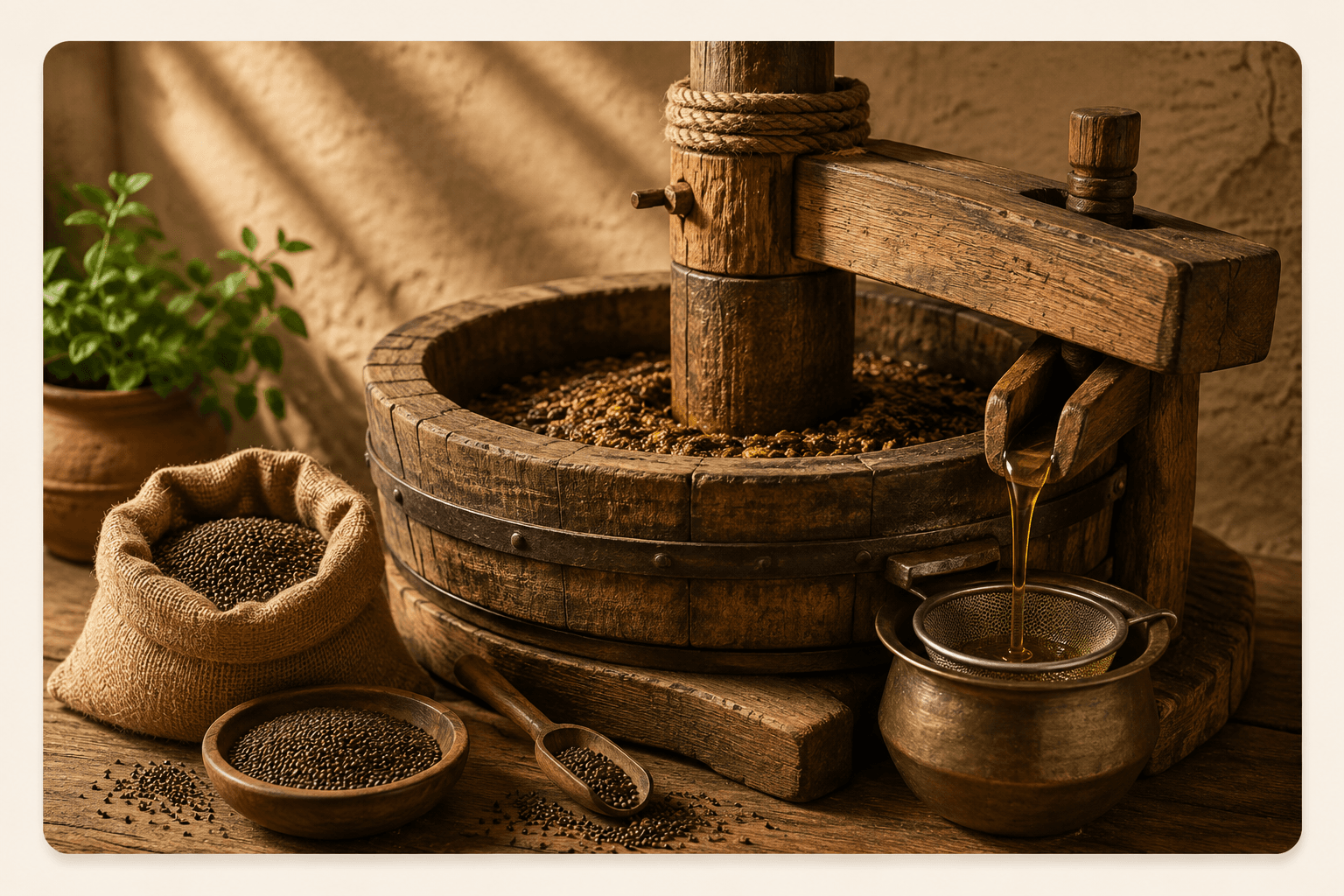
Step 3
Wooden Ghani Extraction
The dried seed goes into the wooden ghani, which crushes and presses it slowly, rotating at low speed. Low speed means low friction heat — the oil that comes off the press hasn't been cooked, just squeezed out.
This is the step the name comes from, and the one we won't shortcut for speed.
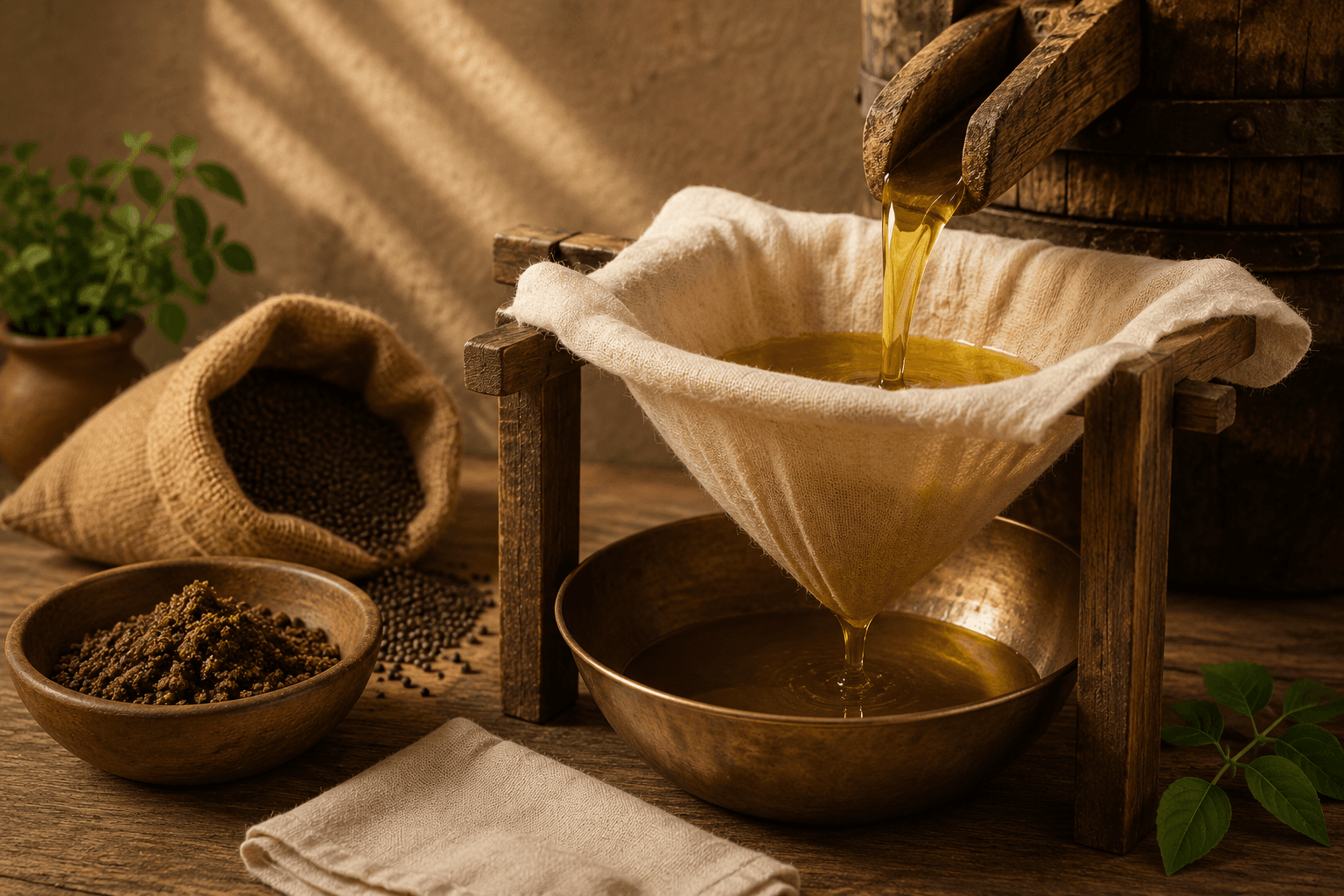
Step 4
Natural Filtration
Fresh-pressed oil is filtered to remove sediment — settling and straining, not chemical treatment. No bleaching, no deodorising, no solvent extraction. What's filtered out is particulate, nothing else.
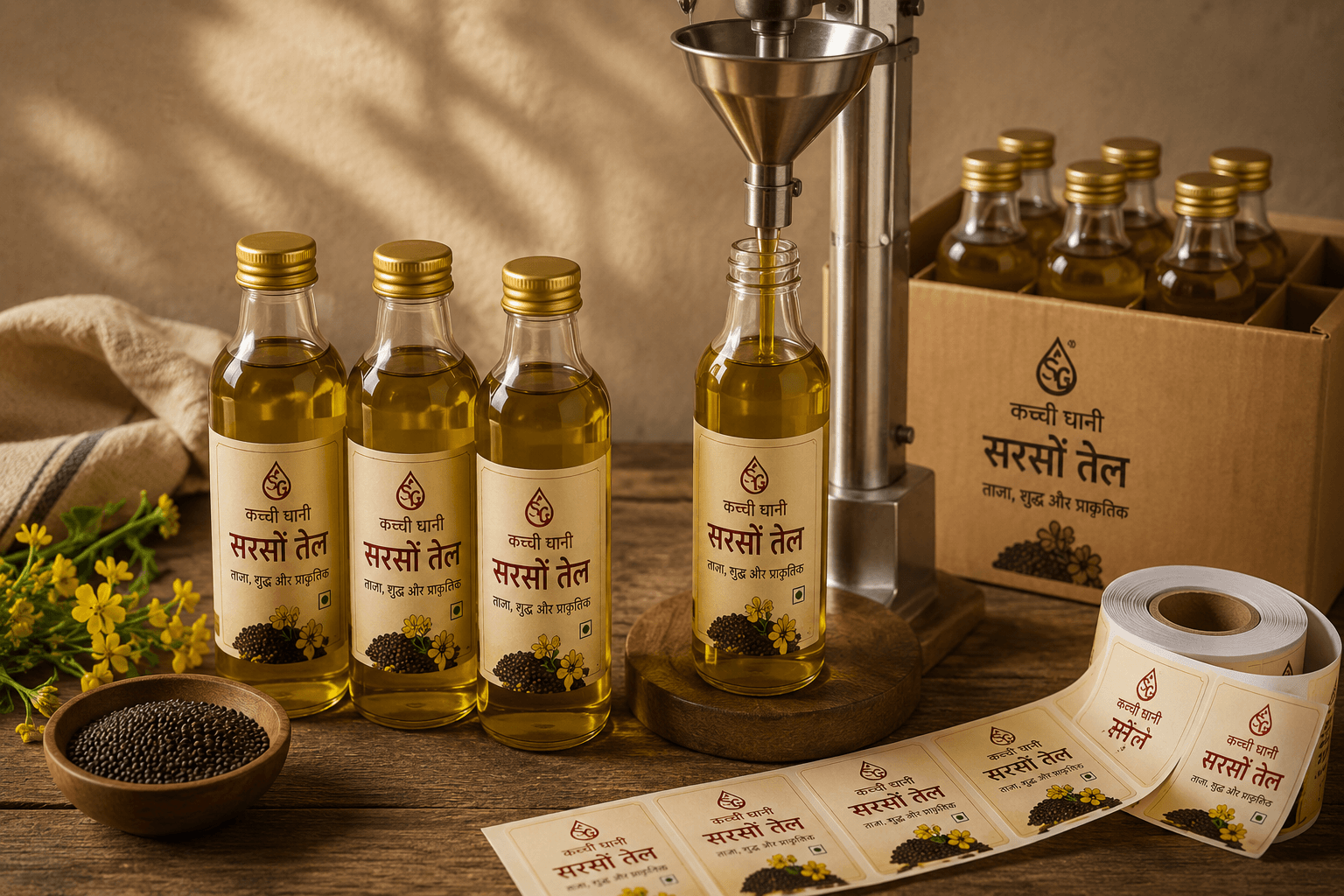
Step 5
Fresh Bottling
The filtered oil is bottled hygienically in small runs, sized and labelled, and sent out. We don't hold large finished-goods inventory sitting in a warehouse — batches move to the shelf quickly.
Storage
Keep the bottle sealed and away from direct sunlight and heat, and check the best-before date printed on the label. Unrefined, unpreserved oil is more sensitive to light and warmth than a refined one — that's the nature of skipping the chemical stabilisers, not a flaw.

